

Engineering Zimbabwe's Digital Future: A Practical Roadmap for Business and Government
The harder question is whether the plan can be delivered as written. Strategy documents are easy to produce. Execution, in a market with currency instability, power shortages, and a constrained fiscal position, is a different exercise entirely. This article looks at where Zimbabwe actually stands today, what the government's plans realistically face, and what a practical, engineering-style approach to digital transformation looks like for any organisation operating in this market right now.
Where Zimbabwe Stands Today
That is not a verdict on intent. It is a measure of how much foundational work remains before "digital transformation" in Zimbabwe can mean the same as it does in markets with mature infrastructure. Understanding this baseline honestly is the first discipline of any serious transformation effort. You cannot design a roadmap for a country or a company that you have not properly assessed.
The Policy Engine Driving Change, and Whether It Can Deliver
What's on the Table
The Structural Headwinds
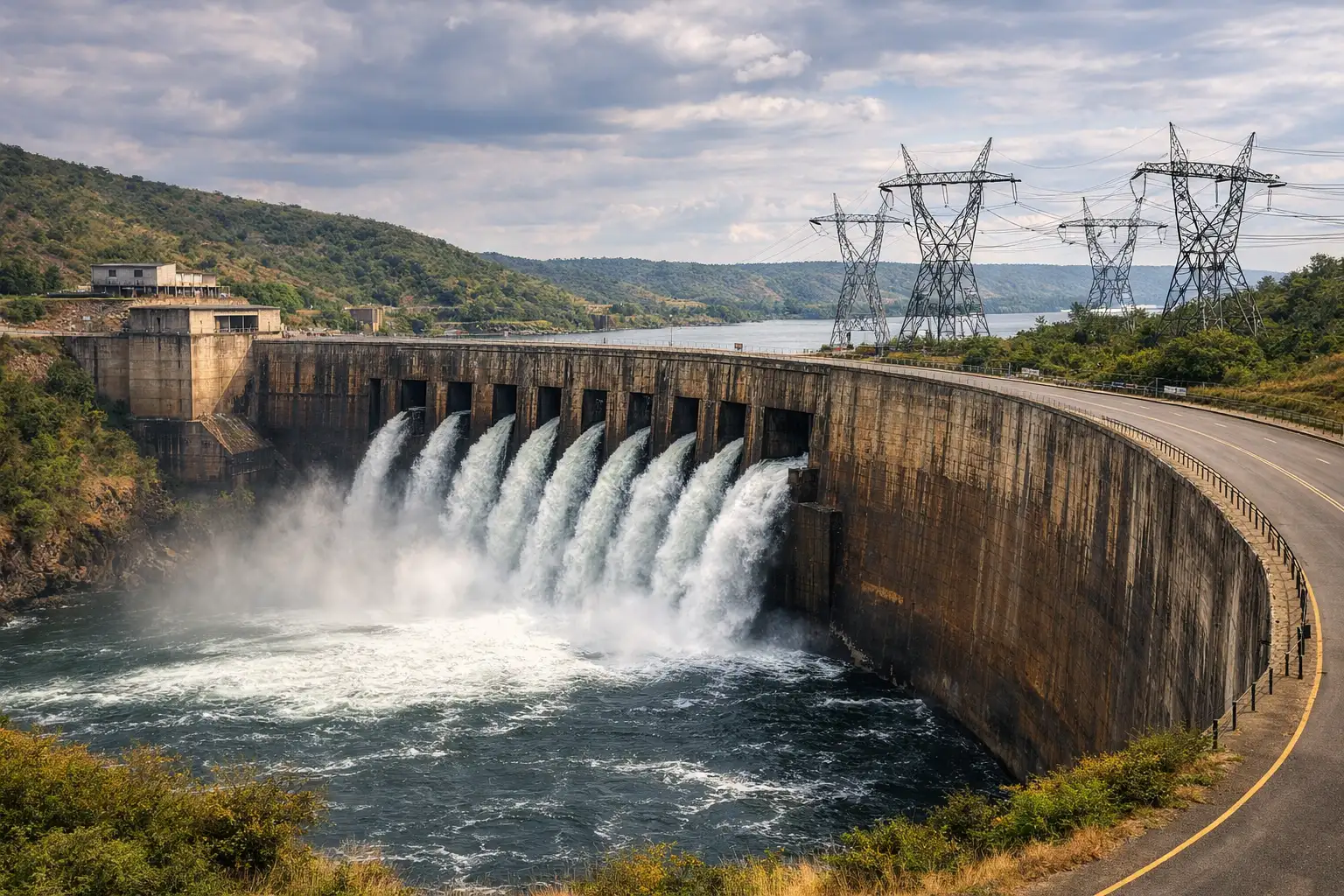
Powering progress: the infrastructure challenge behind Zimbabwe’s digital ambitions.
- Currency instability. The ZiG, introduced in 2024, is Zimbabwe's sixth attempt at a domestic currency since 2000, and the central bank's own targets acknowledge that foreign currency reserves currently cover roughly one month of imports against a stated goal of three to six months. Digital infrastructure runs on imported hardware, cloud capacity, and connectivity equipment. A market that cannot reliably access foreign currency carries that risk into every procurement decision.
- Power supply. Zimbabwe's main hydro source, Kariba Dam, has been running at historically low water levels, with its power station generating well below installed capacity, while the country's coal infrastructure continues to age. Daily blackouts remain a reality despite the country's natural resource wealth. Servers, towers, and always-on government platforms need power the grid cannot yet consistently guarantee.
- Fiscal capacity. Zimbabwe's external debt sits at roughly $12.6 billion, which limits its access to concessional development financing and international capital markets. Large, government-funded digital infrastructure will struggle to outrun this constraint without significant donor or private capital.
- A track record worth noting. Zimbabwe's own 2025 renewable energy capacity target went unmet, a useful precedent for how ambitious national targets and actual delivery have diverged before.
- Regulatory inconsistency. Businesses face overlapping licensing requirements, with manufacturers needing to satisfy at least nine separate licences, and the government has a documented pattern of shifting policy direction with limited notice. That complicates multi-year digital investment planning for public and private organisations alike.
Where the Odds Improve
The honest assessment: success here will be uneven, not uniform. Initiatives anchored in private capital and clear commercial return (fintech, telecom-enabled identity, agritech) are positioned to move fastest. Initiatives dependent purely on constrained public budgets, universal rural connectivity chief among them, will likely take longer than the 2030 timeline suggests.
Where the Real Traction Already Exists

Fintech leading the way — EcoCash shows how digital adoption solves real-world friction.
That is the pattern worth studying. Agriculture, mining, and SME finance all have an EcoCash-shaped opportunity waiting: a genuine pain point, a solution that works within existing infrastructure constraints, and adoption that follows naturally rather than by decree.
The Economic Case, in Numbers
A Practical Roadmap: Engineering the Transition
Start with an honest diagnostic. Before choosing a platform or vendor, assess what is actually true about your data, connectivity, power resilience, and your team's readiness. Most transformation efforts fail not because of a bad technology choice, but because of skipping this step.
Sequence for capacity, not ambition. Given the infrastructure gaps outlined above, a phased rollout beats a big-bang implementation almost every time. Build in quick wins that prove value within months, not years.
Build data sovereignty from the start. Zimbabwe's own AI Strategy places real weight on keeping national data infrastructure under local control. Any organisation building systems in this market should treat that as a design principle, not a compliance afterthought.
Don't separate digital strategy from the power and connectivity problem. A platform that assumes reliable electricity and bandwidth is a platform designed for a different country. Backup power, offline functionality, and bandwidth-light design need to be part of the architecture from day one.
What This Means for Organisations Operating in Zimbabwe

Smart farming & mining in action — drones and data transforming Zimbabwe’s agricultural and mining landscape
- SMEs: the highest-leverage early investments are the ones that remove a daily operational friction, not the ones that look most sophisticated on a slide.
- Government departments and SOEs: the strongest near-term opportunities sit in digitising specific, high-volume service interactions (permits, payments, records) rather than attempting full-system overhauls in one pass.
- Mining and agriculture: sensor-based monitoring, satellite-supported connectivity, and predictive maintenance offer real efficiency gains that do not depend on the national grid being fixed first.
- Financial services: the EcoCash precedent suggests the next wave of adoption will reward institutions that build for the unbanked and underbanked majority, not just the formally banked minority.
Closing Thought
Frequently Asked Questions
What is Smart Zimbabwe 2030?
The Zimbabwean government's master plan is to integrate ICT across the economy and public services, setting eight digital policy priorities for 2026 to 2030, including e-government, AI adoption, 5G rollout, and digital inclusion.
How does Zimbabwe's digital transformation compare to other African markets?
Zimbabwe currently ranks 149th out of 193 countries on the UN's E-Government Development Index, behind the global average, reflecting infrastructure and connectivity gaps that several regional peers have addressed more effectively. Its mobile money adoption, however, is among the strongest on the continent.
What sectors in Zimbabwe are seeing the fastest digital adoption?
Financial services, led by mobile money, remain the clearest success story. Agriculture and mining are showing growing interest in sensor-based and satellite-supported solutions that work around existing infrastructure limitations.
What's the biggest barrier to digital transformation in Zimbabwe right now?
A combination of currency instability, constrained foreign currency access, and unreliable power supply. These affect the cost and reliability of digital infrastructure more than any gap in policy ambition or local digital appetite.